Sponsored article
Why Do Matching Cassocks Matter for Altar Servers in a Parish?
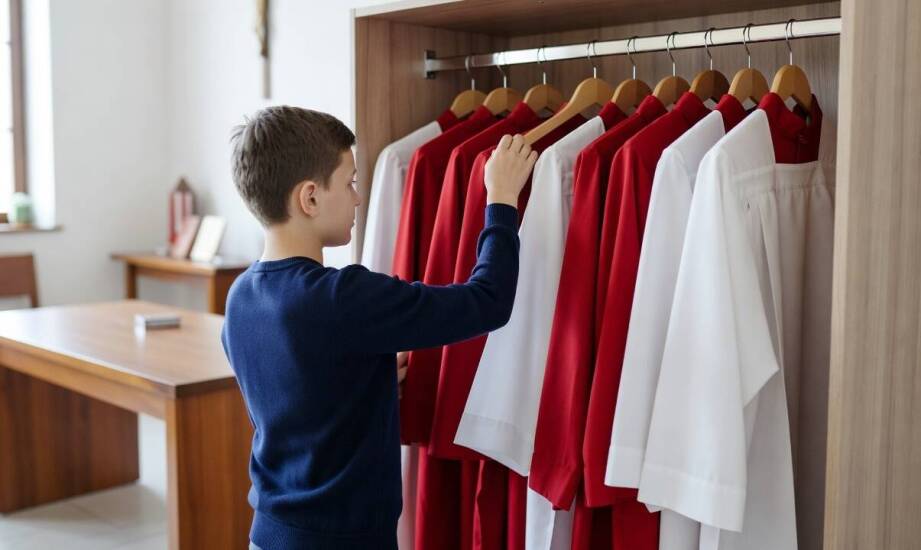
In many parishes, altar servers use a shared set of cassocks stored in the sacristy and worn on a rotating basis by different members of the group. This system clearly demonstrates how a consistent appearance influences the perception of the entire liturgical ministry.
Read more: The Significance of Embroidery on Mitres: What You Need to Know
The sight of altar servers dressed in carefully matched vestments highlights the solemnity of the celebration and eliminates any impression of randomness near the altar. Maintaining these garments in excellent condition requires thoughtful size allocation, regular laundering, and efficient distribution before Mass. Proper management of vestments significantly supports the daily functioning of parish life.
How Does a Shared Set of Vestments Simplify Liturgical Preparation?
A shared set of altar server garments makes preparation for every liturgy much easier. Instead of searching through wardrobes for matching pieces, servers can simply use a complete outfit assigned to a specific hanger.
A standardized collection is usually based on a limited range of traditional colours. Many parishes use one consistent colour scheme, most often black, red, or another colour adopted locally. By avoiding less frequently used variations, the parish does not need to maintain extensive clothing inventories.
This approach helps prevent mismatched garments during regular Masses and larger Sunday celebrations. A visually unified group serving at the altar naturally fosters a sense of reverence among the congregation.
Altar servers also save valuable time before services because they do not need to search for matching collars or surplices. A consistent collection of garments allows church staff to identify missing or damaged items more efficiently, while the sacristan can quickly notice clothing requiring repair.
Matching Sizes to Individual Heights
Careful size selection helps reduce problems associated with the continuous rotation of garments.
Many manufacturers offer a wide range of sizes suitable for both younger altar servers and adult masters of ceremonies. Younger boys typically wear shorter garments, while older servers use longer styles. This allows for comfortable movement around sanctuary steps without constantly adjusting the fabric.
Assigning specific garments to particular height or age groups further streamlines preparation. A cassock that is too long may create a tripping hazard when carrying a cross or candles. A garment that is too short can expose everyday clothing and disrupt the overall visual appearance.
Size charts generally consider not only height but also chest measurements and sleeve length. Choosing the correct combination of these dimensions helps ensure a better fit, allowing the garment to drape naturally and remain comfortable during liturgical duties.
Which Elements of the Outfit Should Be Standardised?
Across the entire altar server group, it is beneficial to maintain the same basic garment style in order to create a harmonious appearance during entrance processions.
A white surplice combined with a properly tailored cassock creates a unified and recognisable liturgical outfit. Such a combination immediately identifies the wearer’s role within the congregation.
Minor differences in styling can be acceptable when accommodating a wide age range of servers.
Ars Sacra supplies garments for liturgical ministries directly from its own production facilities. The company’s online store regularly provides apparel for parishes and Catholic missions around the world.
Many international customers visit the cassocks category when equipping local communities with matching vestments. Machine embroidery and production based on consistent patterns help maintain visual continuity between different batches of garments.
Standardising the collection also means that purchasing additional pieces years later does not disrupt the appearance of the group. Maintaining the same cut and colour scheme helps preserve a cohesive image even when replacing worn or missing items.
How Does Frequent Use Affect Fabric Wear?
Regular use of the same garments by several altar servers throughout the week naturally accelerates fabric wear.
Maintaining a neat appearance requires following the manufacturer’s care instructions. Harsh bleaches and aggressive stain removers should be avoided, as they may permanently damage fibres or cause black fabrics to fade.
Proper ironing at a moderate temperature and storing garments on wide hangers effectively prevent stubborn creases from forming.
If storage space in the sacristy is limited, cassocks may also be folded carefully using garment tissue paper. Natural wear usually appears first as fading on the shoulders and visible abrasion near the hem and collar.
When one set of garments is no longer sufficient to cover the primary liturgical roles during solemn celebrations, the parish should consider purchasing additional vestments.
Long-Term Organisation of Vestments in a Parish
A shared collection of altar server cassocks forms the foundation of a visually consistent altar ministry.
A simple and organised system for distributing and storing garments in the sacristy reduces stress before services begin. This allows altar servers to focus on their duties rather than searching for missing clothing items.
Thoughtful purchasing decisions based on reliable size charts help ensure that every member of the group feels comfortable in their assigned garment.
Keeping to established styles and colour schemes simplifies organisation during both everyday and festive celebrations. Properly maintained fabrics retain their original appearance for many years.
The result is a professional and dignified presentation of altar servers who represent the parish before the faithful. Durable fabrics combined with an organised storage and rotation system significantly improve the management of liturgical vestments.
Key Takeaways
A shared rotating collection of cassocks strengthens visual consistency and emphasises the solemnity of liturgical celebrations.
Standardised garments help keep the sacristy organised and reduce last-minute clothing issues before Mass.
Assigning sizes to specific users or height ranges simplifies rotation and prevents garments from being excessively long or short.
Standardising cuts and primary colours helps maintain a cohesive appearance throughout the altar server group.
Frequent use accelerates fabric wear, making proper washing, ironing, and storage especially important.
When one set of garments no longer covers all liturgical needs, additional vestments should be added to the collection.
FAQ
How should cassock sizes be selected when several altar servers share the same garments?
The best approach is to assign garments according to defined height ranges while also considering chest circumference and sleeve length. This ensures that cassocks are neither too short nor too long and allows garments to rotate smoothly between users. It also speeds up preparation before liturgical services.
Which parts of an altar server’s outfit should always remain consistent?
The most important elements are a uniform basic cut and a consistent colour scheme. This helps the group appear coordinated during processions and at the altar. Minor differences may be acceptable when required by age or height variations.
When does a single set of cassocks stop being sufficient for a parish?
The tipping point comes when the available garments no longer cover all liturgical roles, service schedules, or practical needs related to washing and drying. This often results in delays and increased use of worn garments. Maintaining a reserve set helps solve this issue.
You might be interested

What elements determine the high quality of pork meat?

Why Consider Purchasing a Fuel Tank for Large Enterprises?

What Are the Future Directions for Contract Manufacturing of Nutritional Supplements?