Sponsored article
How Does Tray Surface Texture Affect Glass Stability and Bar Service?
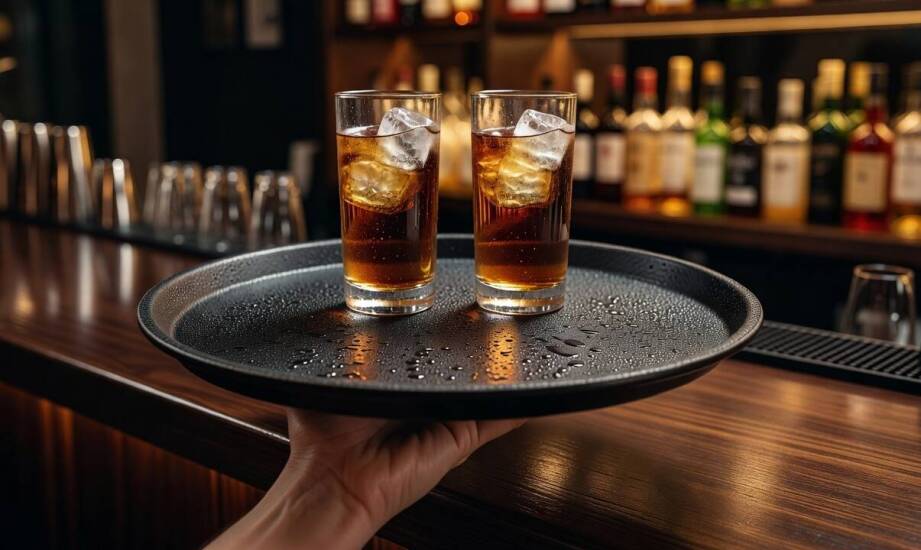
- How Does Tray Surface Affect Glassware Grip?
- What Happens When the Tray or Glass Is Wet?
- Which Materials Are Used in Non-Slip Trays?
- Does a Deeper Texture Always Provide Better Grip?
- How Should an Anti-Slip Tray Be Cleaned?
- How Does Tray Choice Depend on the Type of Bar Service?
- Why Does Tray Design Matter for Staff?
Working in a busy bar or restaurant requires speed, control and equipment that performs reliably during repeated service. A serving tray may appear simple, but its surface has a direct influence on how securely glasses, cups and bottles remain in place while staff move between tables.
Read more: What elements determine the high quality of pork meat?
A smooth rigid surface can allow glassware to move more easily when the tray accelerates, turns or changes angle. A properly designed anti-slip surface increases resistance to this movement and can make the load easier to control.
Read more: What is the significance of vegetable diversity for food producers?
The effectiveness of the tray, however, depends on more than roughness alone. Surface material, texture, moisture, contamination and the type of glassware all influence grip.
Read more: How to Ensure Consistent Dish Flavor Through Standardized Marinade Supplies?
How Does Tray Surface Affect Glassware Grip?
When a waiter carries a tray, the glasses need to remain stationary relative to its surface while the tray itself is constantly moving.
Static friction helps prevent this movement until the forces acting on the glass exceed the available grip.
This is why surface design matters.
A smooth hard plastic and a softer anti-slip material can behave very differently even if both surfaces appear visually similar.
Compliant materials such as PU or TPE can deform slightly under the base of a glass, increasing resistance to movement. A moulded surface texture can also influence grip by changing the way the glass interacts with the tray.
However, a rougher surface does not automatically mean greater friction in every situation.
Performance depends on:
the tray material;
the material and shape of the glass base;
surface texture;
load;
moisture;
drink or grease residues;
movement of the tray.
For this reason, anti-slip performance should be evaluated for realistic hospitality conditions rather than judged only by how rough the surface feels.
What Happens When the Tray or Glass Is Wet?
Cold drinks frequently create condensation on the outside of glasses.
Spilled water, soft drinks or other liquids can also reach the tray surface during service.
Moisture can change friction between glass and the tray, but the effect is not identical for every combination of materials. On some smooth surfaces, a liquid film may make unwanted movement easier. On others, the behaviour can be different.
A dedicated anti-slip surface is designed to maintain better control of the load under the conditions for which the tray was developed.
This does not mean that the surface can completely prevent a glass from sliding.
Sudden acceleration, excessive tray angle or contamination can still overcome the available friction.
The objective is therefore to reduce unwanted movement and give staff greater control, not to create an absolute mechanical lock.
Which Materials Are Used in Non-Slip Trays?
Manufacturers can create anti-slip performance in several ways.
Noex offers non-slip trays with a special surface structure or dedicated anti-slip solutions. Current product specifications include combinations such as polystyrene with PU and polystyrene with TPE.
The rigid part provides the required tray geometry and structural support, while the softer working surface improves grip.
PU and TPE should not be treated as the same material.
Their formulations, hardness, elasticity and resistance to wear can differ, so the best solution depends on the particular tray design and intended application.
For bar service, the complete construction matters more than the name of one polymer.
The tray needs to combine:
sufficient stiffness;
manageable weight;
suitable surface grip;
appropriate dimensions;
resistance to normal handling.
Does a Deeper Texture Always Provide Better Grip?
No. An aggressive texture may provide useful resistance in one application but can make another product unnecessarily difficult to clean.
The ideal surface needs to balance grip with hygiene and everyday maintenance.
This is particularly important in hospitality, where trays come into contact with:
water;
sugary drinks;
syrups;
coffee;
grease;
food residues.
Contamination can change the interaction between glassware and the tray surface.
For this reason, the condition and cleanliness of the working surface can be just as important as its original texture.
A tray intended for intensive bar service therefore needs a surface design that provides useful grip while remaining practical to maintain according to the manufacturer's instructions.
How Should an Anti-Slip Tray Be Cleaned?
Cleaning requirements depend on the particular tray model and material combination.
This point is especially important because aggressive cleaning does not necessarily improve performance. Excessive temperature, chemicals or abrasive scrubbing may damage some anti-slip surfaces.
For its trays with anti-slip surfaces, Noex currently specifies washing with water at no more than 35°C, without detergents or other chemical substances. The surface should not be scrubbed and should be cleaned using a soft cloth or sponge.
These instructions should take priority over general assumptions about professional catering equipment.
Correct maintenance helps preserve the structure of the working surface and reduces the risk of damaging the material during cleaning.
How Does Tray Choice Depend on the Type of Bar Service?
The right tray should be selected according to the actual conditions in which it will be used.
A high-volume bar may prioritise:
stable handling during frequent movement;
sufficient tray area;
suitable rigidity;
reliable anti-slip performance.
A café serving mainly cups and saucers may place more emphasis on a manageable tray size and easy handling.
Cold drinks introduce additional moisture from condensation, while coffee and tea are often carried in cups placed on smooth saucers.
Both situations require stability, but the load characteristics are different.
A well-designed anti-slip tray can support both types of service when its dimensions, surface and load capacity match the glassware being carried.
Why Does Tray Design Matter for Staff?
The tray is part of the working interface between the employee and the load.
When glasses move less unexpectedly, staff can focus more easily on:
walking through narrow spaces;
maintaining balance;
serving guests;
controlling several drinks at once.
This can reduce the likelihood of spills and improve working comfort.
However, a non-slip surface is only one part of the design. Tray stiffness, dimensions, rim geometry, weight and how the load is distributed also influence handling.
Noex therefore offers anti-slip trays in different shapes and dimensions, including round and rectangular models with PU or TPE working surfaces.
The most effective tray is ultimately the one that matches the way it will actually be used.
Surface texture and material can significantly improve glass stability, but good performance results from the combination of grip, tray construction, correct loading and appropriate care.
You might be interested

What elements determine the high quality of pork meat?
Why Consider Purchasing a Fuel Tank for Large Enterprises?

What Are the Future Directions for Contract Manufacturing of Nutritional Supplements?