Sponsored article
How Does Bolesławiec Pottery Work with a Minimalist Table and Modern Interior?
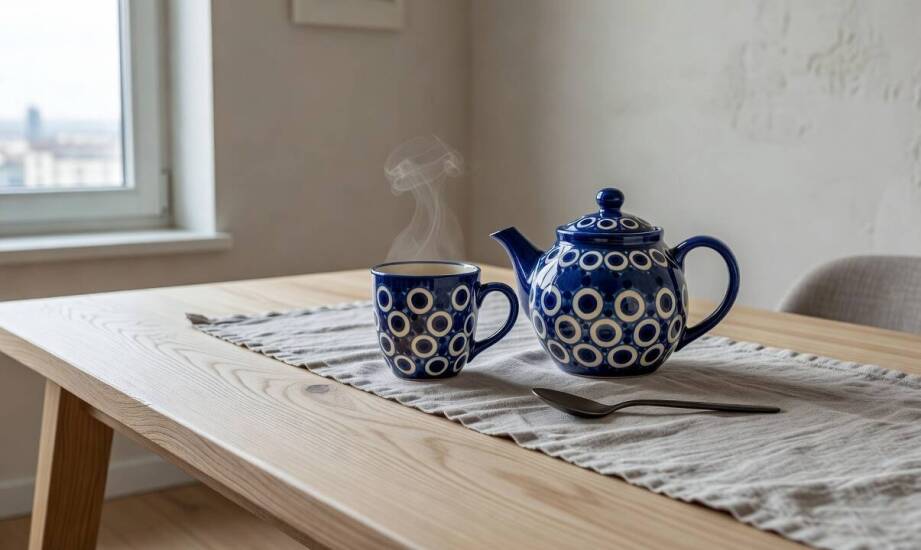
- Neutral Backgrounds Make Traditional Patterns Stand Out
- How Can Bolesławiec Pottery Be Combined with Natural Materials?
- Can Decorated Pottery Still Be Practical for Everyday Use?
- How Can Different Bolesławiec Patterns Be Mixed Without Creating Visual Chaos?
- Traditional Craftsmanship in a Contemporary Interior
A simple table covered with a light cloth can look completely different when hand-decorated Bolesławiec pottery is added to the setting. Traditional patterns and intense cobalt blue challenge the idea that contemporary interiors require only plain and understated tableware.
The contrast between simple furniture and detailed craftsmanship can create a strong but balanced composition. Rather than overwhelming a minimalist interior, decorated pottery can become a clear focal point and break up large areas of neutral colour.
Neutral Backgrounds Make Traditional Patterns Stand Out
A calm background, such as a plain tabletop or a single-colour tablecloth, allows the distinctive patterns of Bolesławiec pottery to remain clearly visible.
Simple surroundings do not compete with dense cobalt or floral decoration. Instead, they give the patterns space to stand out.
Without numerous colourful accessories around them, the eye can focus on the hand-applied stamps, brushwork and individual details of the ceramic pieces.
How Does the Background Colour Affect the Pottery?
Tablecloths, napkins and the tabletop itself can noticeably change the way decorated ceramics are perceived.
White and light grey emphasise the contrast of deep cobalt decoration. Warm beige, natural linen and wooden surfaces soften the effect and create a warmer setting.
A bowl in a distinctive pattern such as 61A can therefore feel quite different depending on whether it is placed on a white tablecloth, natural oak or textured linen.
Changing the textiles is a simple way to adapt expressive Bolesławiec ceramics to a modern interior without making the arrangement feel too busy.
How Should Different Tableware Pieces Be Arranged?
Different ceramic forms can help organise the table according to the way it is being used.
A rounded teapot and cups with saucers can create a natural area for afternoon tea. Larger bowls and dinner plates define the main meal setting.
Rounded Belly Cups can add another distinctive form without requiring additional decorative accessories.
The aim is not to fill every available space with patterned pottery, but to give individual pieces enough room to remain visually clear.
How Can Bolesławiec Pottery Be Combined with Natural Materials?
Traditional ceramics work particularly well with wood, linen and simple glassware.
Wood introduces warmth and natural texture, while linen softens the setting. Transparent glasses or carafes provide visual lightness between strongly decorated ceramic pieces.
In this type of arrangement, hand-decorated pottery can remain the main decorative element without making the table feel overloaded.
This approach works especially well in minimalist interiors, where a limited number of materials makes each object more noticeable.
Can Decorated Pottery Still Be Practical for Everyday Use?
Yes. Contemporary Bolesławiec stoneware combines decorative craftsmanship with everyday functionality.
Pieces produced by Manufaktura are designed for regular household use and can be used in the dishwasher and microwave.
The decoration is applied before glazing, and the final high-temperature firing creates a durable glazed surface that protects the pattern during normal use.
This allows a richly decorated breakfast plate or cup to be used during an ordinary weekday meal as easily as during a more formal dinner.
The pottery does not have to be reserved exclusively for special occasions.
How Can Different Bolesławiec Patterns Be Mixed Without Creating Visual Chaos?
Different patterns can work together when they share a common visual element.
For example, the cobalt decoration of 70MI can be combined with other blue-and-white patterns, even when the density and type of ornament are different.
Keeping a consistent colour base helps organise different shapes and decorative motifs.
Another option is to combine one highly detailed pattern with calmer pieces so that not every item competes for attention.
The same principle applies to the rest of the table: if the ceramics are expressive, textiles and accessories can remain simple.
This allows a collection to grow gradually without requiring every piece to carry exactly the same pattern.
Traditional Craftsmanship in a Contemporary Interior
A minimalist interior can provide a particularly effective setting for handmade ceramics because there are fewer competing decorative elements.
Patterns designed by artists such as Anna Szeremeta or Danuta Poremska become easier to appreciate when surrounded by simple colours and materials.
The result does not have to look rustic or traditional.
A cobalt bowl on a clean wooden table, a decorated mug in a modern kitchen or a group of patterned plates on open shelving can introduce craftsmanship without changing the overall contemporary character of the room.
The pottery factory in Bolesławiec combines traditional hand-decoration with tableware intended for modern everyday use.
Manufaktura in Bolesławiec continues to produce stoneware in patterns that can work both in traditional settings and in restrained contemporary interiors.
Bolesławiec pottery therefore does not need a heavily decorated environment to feel at home. Against a neutral background, its colour and hand-applied patterns can become the element that gives a minimalist table warmth, rhythm and individual character.
You might be interested

What elements determine the high quality of pork meat?

Why Consider Purchasing a Fuel Tank for Large Enterprises?

What Are the Future Directions for Contract Manufacturing of Nutritional Supplements?